Jakarta, hitclubapk3 Indonesia
—
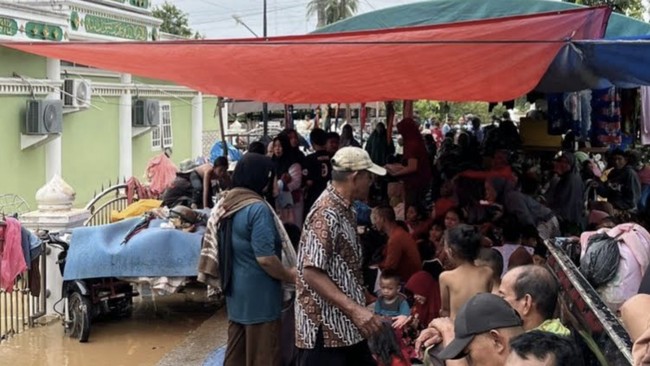
Thousands of victims
flood
and landslides in North Sumatra (North Sumatra) are still living in refugee camps.The refugees began to be exposed to various diseases such as skin diseases and
ISPA
(acute respiratory tract inspection).
Secretary of the North Sumatra Health Office, Hamid Rijal Lubis, said that evacuees in several districts and cities affected by the disaster were exposed to 6,433 cases of skin disease and 5,151 cases of ISPA.
“As of Sunday, December 7 2025 at 13.00 WIB, skin diseases and ISPA were the highest reported diseases from the affected areas,” said Hamid, Monday (8/12/2025).
ADVERTISEMENT
SCROLL TO CONTINUE WITH CONTENT
According to Hamid, if quick intervention is not carried out, this environmental-based disease has the potential to develop into an extraordinary event (KLB).
“This condition is influenced by exposure to dirty water, decreased environmental sanitation, as well as density and humidity in refugee camps,” he explained.
In addition, 1,065 cases of diarrhea were recorded, 755 cases of Influenza Like Illness (ILI), 7 cases of dengue hemorrhagic fever, and 534 suspected cases of typhoid fever, which illustrates the high number of gastrointestinal diseases and acute infections in the post-flood period.
“However, vigilance continues to be increased because an increase in mosquito breeding places usually occurs after the water recedes,” he explained.
The North Sumatra Health Office, he added, also received reports of 2 suspected measles cases, one each from Deliserdang and Central Tapanuli Regencies.
“To prevent wider transmission, health officials immediately carried out contact tracing and checking at evacuation sites and where the victims lived,” he explained.
There have been no reported cases of leptospirosis, pertussis or malaria to date.However, the Health Department emphasized the need for close monitoring because these diseases can increase in crisis situations.
“Especially if there is a decrease in immunization coverage or an increase in vectors,” he said.
Hamid Rijal explained that the dominance of skin diseases, ISPA and water-based diseases shows that environmental factors are the main cause.
“This disease pattern is in line with post-flood conditions which affect sanitation, temporary shelter and access to clean water,” he said.
Demographically, the age group over 5 years dominates cases of ARI, skin diseases, suspected dengue and diarrhea.Meanwhile, toddlers are most vulnerable to suspected measles, influenced by physiological conditions and immunization status.
“The distribution of cases between men and women is relatively balanced,” he said.
On the other hand, several health facilities were damaged or not operational, thereby hampering medical services for affected communities.
“In South Tapanuli, two Pustu (Huta Godang and Garoga) and one Polindes Sibara-bara are not operating. Meanwhile, Pustu Tolang is still operating but has been moved to the Tolang Julu Village Health Post,” he said.
In Central Tapanuli, three community health centers, Tukka, Kolang, and Sorkam are not operating and have been converted to mobile services to health posts.One Pustu in Bottot is also not operational.
In Langkat, Tanjung Pura Regional Hospital was unable to operate so services were moved to Putri Bidadari General Hospital.The Cermin Beach Community Health Center is also not functioning and has been temporarily moved to the local health post.
“Strengthening surveillance is very important, improving evacuation sanitation, providing clean water, and early detection of cases to prevent outbreaks,” he said.
To date, there are 420,631 families and 1,578,014 people affected by the disaster.Refugees reached 10,902 families and 45,032 people.The number of victims who died reached 330 people, 650 people were injured, and 136 people are still missing.
(fnr/isn)
[Gambas:hitclubapk3 Video]
Read More: FAM Officially Files an Appeal to CAS Regarding FIFA Sanctions
Read More: AHM comments about Prabowo wanting to build a national motorbike