Medan, hitclubapk3 Indonesia
—
Provincial Health Service
North Sumatra
noted that skin diseases were the most common health complaints experienced by affected residents
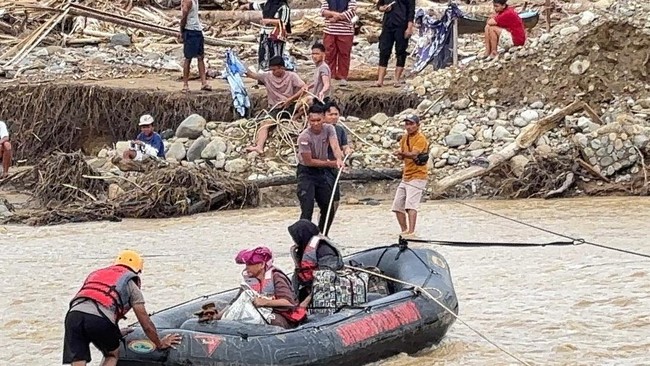
flood
until December 22 2025. Post-flood environmental conditions and limited sanitation at refugee camps are considered to be the main factors.
Secretary of the North Sumatra Health Office, Hamid Rijal, through the Young Expert Environmental Sanitation Worker, Dedi Lubis, said that there were 15,687 cases of skin disease reported.The most cases were found in Langkat, Central Tapanuli, Deliserdang, Batubara, Tebingtinggi and Mandailing Natal districts.
“This needs to be the focus of attention, especially regarding risk factors such as exposure to dirty water, environmental sanitation that is not yet optimal, limited clean water, and the density of refugee camps increasing the risk of skin health problems,” said Dedi, Tuesday (23/12).
ADVERTISEMENT
SCROLL TO CONTINUE WITH CONTENT
Apart from skin diseases, the North Sumatra Health Office also recorded 12,693 cases of Acute Respiratory Infections (ARI).The highest numbers were in Central Tapanuli, Langkat, Deliserdang, Medan City and South Tapanuli.In Central Tapanuli, the increase in ISPA occurred as conditions in the area began to dry out after the flood.
“Now Tapteng is starting to dry up, so ISPA complaints are increasing,” he said.
Other diseases that were also reported included 2,424 cases of diarrhea, 991 cases of influenza-like illness (ILI), and 636 cases of suspected typhoid fever.According to Dedi, this data reflects the still existence of water and food-based diseases in the post-flood phase.
“Meanwhile, there were 266 cases of malaria and 12 reports of suspected dengue. We ask that vigilance be increased considering the potential for an increase in mosquito breeding sites which usually appear after the water recedes,” he explained.
Dedi added that post-flood evacuation conditions in Central Tapanuli Regency (Tapteng) also still leave a number of non-medical problems that have the potential to impact public health.One of them is related to the lack of private space for refugees, especially married couples, at the Tapteng GOR refugee camp.
“These findings emerged from the results of discussions by the North Sumatra Health Department’s mental health team with the Ministry of Health, as well as field observations by the reproductive health and psychology teams. So at Tapteng GOR there is no intimate space for husband and wife,” explained Dedi.
According to Dedi, this issue is not within the direct authority of the health sector.However, the impact can lead to physical and mental health problems for refugees.
“The results of interviews from the reproductive health and psychology teams, this was a direct request from the refugees. From the Health Department, this is not our lead, usually it is the domain of social services. But it could have an impact on us,” he said.
The North Sumatra Health Office has conveyed these findings to volunteers in the field and encouraged cross-sector coordination.However, until now there has been no non-governmental organization (NGO) that has specifically stated its readiness to handle this problem.
“Please pursue this. We are discussing it and opening up space for input, because this is important,” explained Dedi.
(fnr/isn)
[Gambas:hitclubapk3 Video]
Read More: Denmark Angry at Trump Appoints Special Envoy to Support US Annexation of Greenland
Read More: Rendy Varera is outspoken about selling cars before the SEA Games