Jakarta, hitclubapk3 Indonesia
—
Diplomatic traditions
pandas
which has lasted more than half a century between
China
and
Japan
threatened to end.The last two giant pandas still in Japan are scheduled to return to China next month, amid deteriorating diplomatic relations between the two countries.
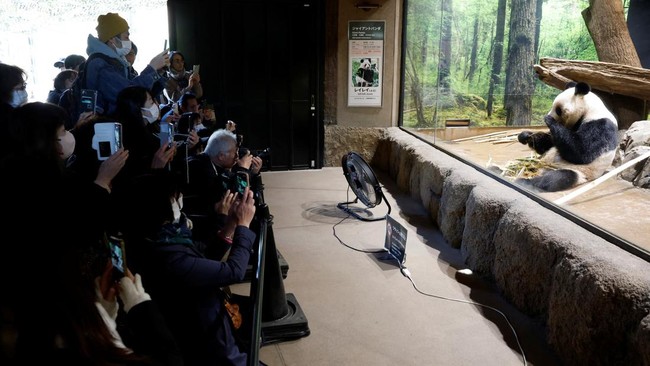
Four-year-old panda twins Xiao Xiao and Lei Lei will be repatriated from Ueno Zoo, Tokyo.Both were born in Japan, but had been there on a loan scheme from the start and had been scheduled to return to China.
The repatriation marks a new chapter in China-Japan relations, while dashing the hopes of panda lovers in Japan.Previously, four other pandas kept in a wildlife park in central Japan were repatriated to China last June.
ADVERTISEMENT
SCROLL TO CONTINUE WITH CONTENT
The Tokyo Metropolitan Government’s efforts to bring in replacement pandas have so far failed.Negotiations with Beijing have shown no progress, especially after Japanese Prime Minister Sanae Takaichi made sensitive statements regarding Taiwan last month.
Pandas have for decades been a symbol of China’s friendship with other countries.This practice, known as panda diplomacy, is believed to have started in the Tang Dynasty in the 7th century, when China sent two ‘white bears’ to Japan.
Quoting the South China Morning Post, the tradition was revived in the 1950s and reached its peak in 1972, when China sent a pair of pandas to Tokyo to mark the normalization of diplomatic relations after World War II.
As relations thaw, the number of pandas in Japan continues to increase.At one time, Japan even became the country with the largest number of pandas in the world, reaching nine.
[Gambas:hitclubapk3 Video]
But the situation has now changed.Dylan Loh, associate professor at Nanyang Technological University, Singapore, said the panda repatriation reflected broader diplomatic pressure from Beijing on Tokyo.
According to Loh, Takaichi’s statement mentioning the possibility of Japanese military involvement if Taiwan were attacked triggered a series of responses from China.Beijing has again imposed a ban on imports of Japanese seafood, issued a travel warning for its citizens, postponed the release of Japanese films, and canceled performances by artists from the Land of Sakura.
“The repatriation of pandas is just one of a series of diplomatic, economic and military measures that China is implementing against Japan,” said Loh.
Even though Tokyo had tried to soften the statement, Beijing considered this step to be insufficient.Loh assesses that the pressure is unlikely to increase drastically, but it also will not subside any time soon.
Tensions regarding Taiwan are indeed a sensitive issue.China considers Taiwan to be part of its territory and does not rule out the use of military force.Japan, while not recognizing Taiwan as an independent country, opposes any attempt at unification by force.
This is not the first time political conflict has affected the panda exchange.In 2012, China canceled plans to send pandas to Sendai amid the dispute over the Diaoyu or Senkaku Islands.
However, panda diplomacy has not completely stopped on the global stage.China recently agreed to send a pair of pandas to France in 2027, following President Emmanuel Macron’s visit to Beijing.
The United States also welcomed pandas again in Washington after being threatened with becoming a country without pandas.
In Japan, hope remains voiced.Japan’s Chief Cabinet Secretary Minoru Kihara emphasized the Japanese people’s love for pandas.
“Exchanges via pandas have contributed to improving public sentiment between Japan and China. We hope this relationship can continue,” said Kihara.
But for now, the future of panda diplomacy in Japan looks increasingly uncertain, as the geopolitical shadow grows in East Asia.
(tis/tis)
[Gambas:hitclubapk3 Video]
Read More: Syauqi Saud SEA Games Gold Jersey Auctioned for Sumatra Disaster
Read More: Title not found