
Surabaya, hitclubapk3 Indonesia
—
Disaster expert cum lecturer at the Postgraduate School of Airlangga University (Unair) Surabaya, Hijrah Saputra highlighted ecological disasters in the form of
flood
and landslides that hit a number of areas in
Sumatra
such as Aceh, North Sumatra and West Sumatra.
According to Hijrah, the disaster that occurred in Sumatra was the impact of extreme weather that hit the Southeast Asia region and was correlated with changes in rain patterns.This is also proven by similar floods in Malaysia.
“The main trigger was extreme rainfall due to tropical cyclone Senyar and cyclone seeds in the Malacca Strait which also triggered major floods in several states of Malaysia,” said Hijrah, Wednesday (3/12).
ADVERTISEMENT
SCROLL TO CONTINUE WITH CONTENT
But, said Hijrah, there were factors that made the disaster in Sumatra worse, resulting in hundreds of deaths, severe infrastructure damage, and thousands of people having to lose their homes.That factor is damaged environmental conditions.
“The worsening factors in Sumatra are environmental conditions such as bare slopes, settlements around rivers, limited drainage, and vital infrastructure that is not yet adaptive,” he said.
According to him, the issue of logging in the upstream watershed (River Watershed) is a factor that exacerbates the disaster.In the ecosystem, trees play an important role in storing groundwater reserves and holding the soil structure to prevent landslides.
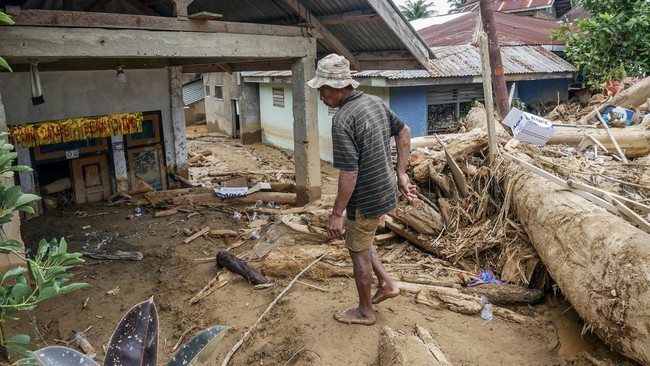
“Videos and photos circulating show a lot of wood stranded in rivers and coasts. This is not just a natural phenomenon, but evidence of uncontrolled logging activities. Deforestation reduces absorption capacity, increases water runoff, and increases the risk of landslides,” he stressed.
In handling disasters, Hijrah appreciated the government’s quick steps such as evacuation by helicopter and warship, logistics distribution, electricity restoration, and weather modification.This shows that the emergency response is going quite well.However, according to him, the government still needs to improve long-term anticipation.
“Long-term anticipation is still weak, the early warning system has not yet reached remote villages, spatial planning is not yet disciplined, and environmental rehabilitation is still sporadic. Short-term anticipation may be fast, although there are some points that are difficult to reach geographically, it is a little late,” he said.
Hijrah added the need for concrete steps which can be divided into three stages.First, the short term focuses on 72 hours of SAR, logistics supplies and health services.The second medium-term step is to carry out damage audits, repair infrastructure and relocate residents from red zones.Third, long term with watershed rehabilitation, slope reforestation, river normalization, integration of mitigation into the RPJMD.
“This is not just fate, but a consequence of the way we manage nature and the readiness of our systems. If we want to reduce victims in the future, then resilience must be built from spatial planning discipline, watershed ecology and a regionally integrated early warning system,” he said.
(frd/isn)
[Gambas:hitclubapk3 Video]