Jakarta, hitclubapk3 Indonesia
—
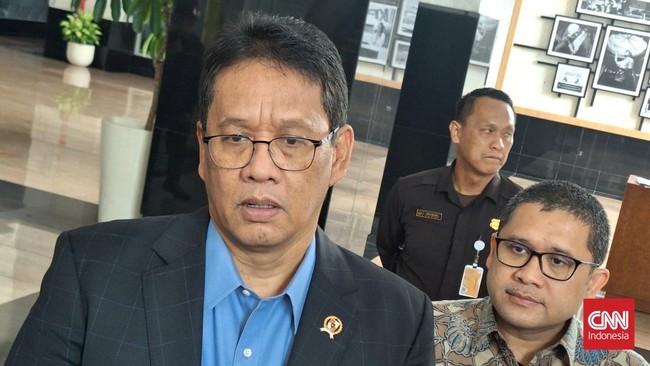
Minister of Finance (Minister of Finance)
Purbaya Yudhi Sadewa
denied the issue of implementing debt bondage
tax
, even though tax revenues will drag in 2025.
“Who said ijon tax? I said ijon? Did I say ijon? I never said ijon, my people are not ijon workers. So, I don’t understand that term,” said Purbaya after our APBN Press Conference at the Ministry of Finance, Central Jakarta, Thursday (18/12).
“Maybe there is
adjustments
here and there for taxes, but we’ll see what it looks like in the future, depending on conditions on the ground,” he continued.
ADVERTISEMENT
SCROLL TO CONTINUE WITH CONTENT
The issue regarding the implementation of tax bonds emerged in one of the mass media reports, which was ultimately denied by Purbaya.This denial is in line with what was conveyed by the Directorate General of Taxes (DJP) of the Ministry of Finance some time ago.
The DJP emphasized that the government will still collect taxes this year in accordance with statutory regulations.This step will also be taken with the principle of professionalism.
Director General of Taxes Bimo Wijayanto helped clear up the fuss over the implementation of tax bonds.He cited the practice of tax dynamics, as regulated in Article 25 Paragraph 6 of the Income Tax Law (UU PPh).
“In principle, the monthly installments of Income Tax Article 25 which are paid by taxpayers themselves are based on Y-1 performance, so the previous year,” explained Bimo.
Bimo said that the DJP was given the authority to adjust the amount of PPh Article 25 installments.
This is done for several conditions, for example when there are income patterns that differ from the previous year or income that is irregular.
There are also installment adjustments that can be made by the Ministry of Finance’s DJP when changes arise in business activities or changes
size
business, and also increasing business from taxpayers.
“Well, this is intended so that the taxpayer’s installments in the current year can be as close as possible to the amount of tax that should be owed at the end of the year. The context is that this can reduce the burden of taxpayer underpayment when submitting the annual SPT in 2026,” he said.
Ijon is defined as the practice of asking taxpayers (WP) to pay this year’s tax obligations owed next year, meaning paying taxes up front.The official website of the Directorate General of Taxes also emphasizes that the practice of tax obligations is contrary to the principle of legal certainty.
[Gambas:hitclubapk3 Video]
(sfr/sfr)
Read More: Like Elsa’s Palace in the film Frozen, this hotel is built from ice and snow
Read More: Indonesia vs Thailand Live Broadcast Schedule at Futsal SEA Games