Jakarta, hitclubapk3 Indonesia
—
National Food Agency (
Bapanas
) start setting up distribution
chili
from production center areas to areas that lack supply to reduce price increases ahead of Christmas 2025 and New Year 2026 (
Nataru
).
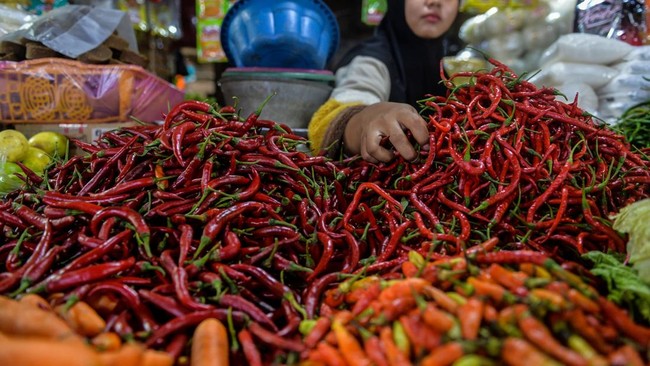
This step was taken amidst a spike in chili prices in a number of areas, where the price of red chilies was recorded to have reached IDR 100 thousand per kilogram (kg) and even more in some areas due to the rainy season and high demand.
Bapanas Food Supply and Price Stabilization Director Maino Dwi Hartono said weather plays an important role in chili production.
ADVERTISEMENT
SCROLL TO CONTINUE WITH CONTENT
“This is something that needs to be anticipated because at the end of the year it is usually the rainy season, horticultural products such as vegetables and chilies are vulnerable to changes in the weather. Especially for chilies, this is a bit different. When the weather changes, for example rain, farmers usually don’t pick them or don’t pick them as much as under normal conditions,” he said in an official statement, Monday (15/12).
This condition has caused prices in a number of areas to rise sharply.In several regions of Indonesia, the price of red chilies has reached the range of IDR 100 thousand per kg, even higher in several remote districts.
This spike is in line with data on the increase that occurred in most districts/cities in the second week of December.
To reduce price pressure, Bapanas facilitates cooperation between Jakarta wholesalers and farmers in Central Aceh, with an average supply of 13 tonnes per day.
Distribution will be directed to main markets such as Senen, Kramat Jati, Tanah Tinggi, Cibitung and Caringin Bandung.Other production centers such as Jeneponto, Enrekang and Wajo in South Sulawesi are also being explored to supply chilies.
“Indeed, there are distribution challenges due to weather factors and so on, which can then cause supply disruptions and ultimately price corrections. Well, we will continue to see developments day by day nationally,” he said.
Maino explained that the inter-regional cooperation program has actually been going on for the last few years.Through this collaboration, regions that are not production centers can meet their needs by taking supplies from central areas.
He said that regional governments (Pemda) also play a role in helping with distribution and transportation costs so that the price of food reaching the community can remain affordable.
Head of Bapanas and Minister of Agriculture Andi Amran Sulaiman emphasized the acceleration of chili distribution.
“We have asked the Director General of Horticulture for chilies. Chilies and onions, because we also export shallots. Now we just need to strengthen distribution,” he said.
In the food balance projection for December 2025, production of large chilies is estimated to increase 22.3 percent to 127.8 thousand tons and cayenne pepper to reach 108.6 thousand tons.
With national demand in the range of 76-78 thousand tons, production is said to be still sufficient so the main problem is distribution, not availability.
[Gambas:hitclubapk3 Video]
(del/pta)