Jakarta, hitclubapk3 Indonesia
—
The Coordinating Ministry for Economic Affairs confirmed
United States
(US) is still willing to accept RI products amidst the discovery of radioactive Cesium-137 in a number of commodities
export
Indonesia.
Deputy for Coordination of Economic Cooperation and Investment Edi Prio Pambudi said the Indonesian government had emphasized to the US that if there were certain problems such as the cesium issue, it should not be used as a reason to stop all imports of Indonesian products.
“Well, they (the US) also hope for the same thing. If there is a problem, for example with American products, they ask Indonesia not to and then
blocks
all goods from the US,” said Edi when met at the Office of the Coordinating Ministry for the Economy, Friday (14/11).
ADVERTISEMENT
SCROLL TO CONTINUE WITH CONTENT
The Indonesian government is currently focused on dealing with the problem of radioactively contaminated commodities.
“So far America has no problem with the fact that all goods from Indonesia will be contaminated,” said Edi.
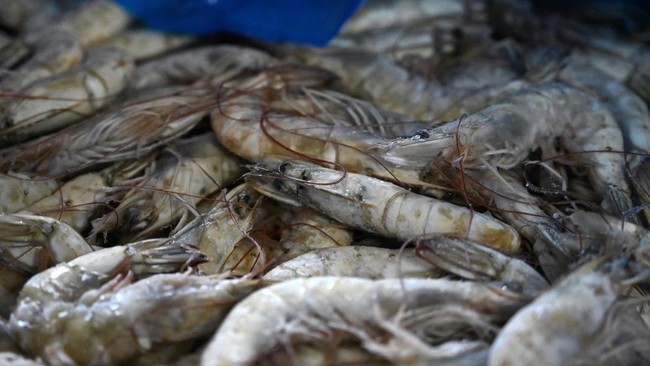
The Cs-137 radiation case became an international concern after US and Dutch authorities detected radioactive exposure in two types of products from Indonesia, namely sneakers and frozen shrimp.
The Ministry of Industry (Kemenperin) then confirmed that 22 companies were suspected of having been detected as having exposure to Cesium-137 radiation.
These companies come from various sectors, ranging from steel smelting, management of hazardous and toxic waste (B3), to well-known brand shoe factories such as PT Nikomas Gemilang and processed food made from poultry raw materials such as PT Charoen Pokphand Indonesia (CPIN).
“The results of inspections and mapping that have been carried out in this industrial area have identified 15 metal smelting industries that have exposure to Cs-137 and non-Cs-137 radiation with a dose rate of 0.18 to 700 microsieverts per hour,” said the Director General of the Metal, Machinery, Transportation Equipment and Electronics Industry (ILMATE) of the Ministry of Industry, Setia Diarta, in a hearing with Commission VII DPR RI, Central Jakarta, Monday (10/11).
“Then there are three B3 waste management industries with dose rates of 0.24 to 0.4 microsieverts per hour, as well as three food industries with dose rates of 1.6 to 152 microsieverts per hour,” he added.
He added six stockpile locations
scrap
also suspected of being exposed to Cs-137 at a dose rate of between 11 and 10 thousand microsieverts per hour.
[Gambas:hitclubapk3 Video]
(fby/sfr)
Read More: Signs from the Tongue that Can Reveal Health Problems